DCPA NEWS CENTER
Enjoy the best stories and perspectives from the theatre world today.

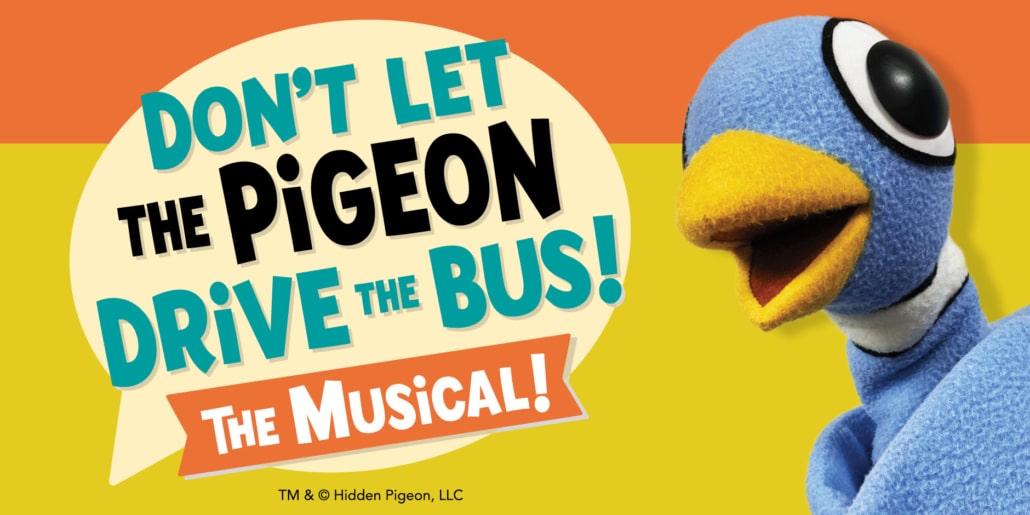
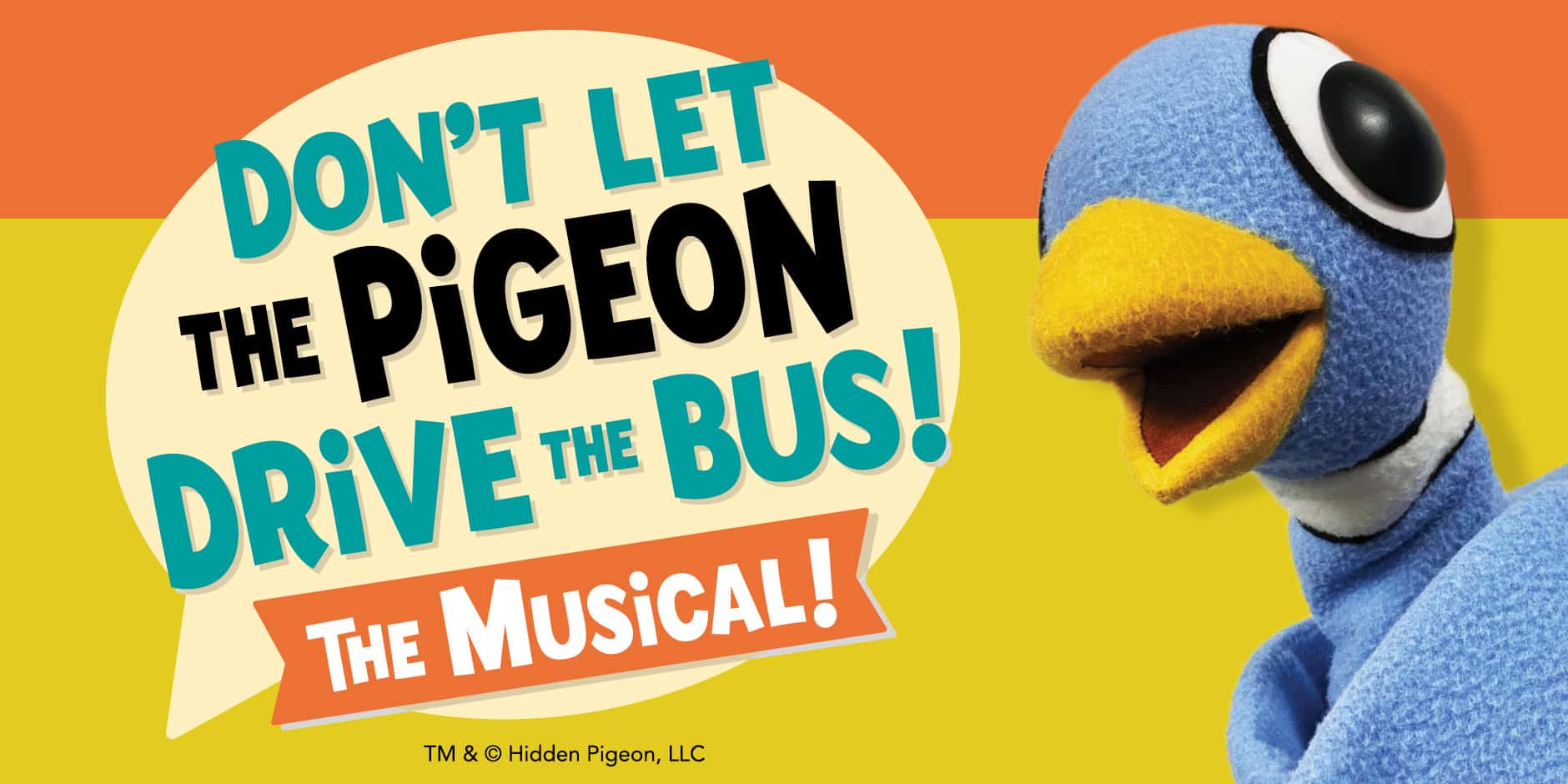
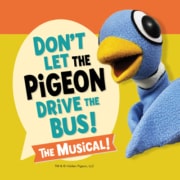
What started with Don’t Let the Pigeon Drive the Bus! has grown into the beloved Pigeon series, which now includes more than 15 books. Although the series is intended for children ages 3 to 5, its humor appeals to readers of all ages. At the heart of the series is the mischievous and charismatic Pigeon himself. Author Mo Willems draws readers into Pigeon’s world through speech bubbles and expressive illustrations as Pigeon hilariously argues for things he shouldn’t be allowed to do. Willem famously said, “We create our work for children not because they’re ‘cute,’ but because they’re human beings, deserving of respect.”
Pigeon is an energetic blue bird with a yellow beak who has a big personality, an even bigger imagination, and is always convinced he knows exactly what he should be doing, even when everyone else disagrees! When he wants something, he doesn’t give up. His persistence and imagination lead to some very funny conversations with big feelings.
Favorite Food: Hot Dogs
Favorite Dream: Driving Bus
Favorite Activity: Hot Dog Parties
Favorite Friends: Duckling, Hot Dog Vender, Construction Worker, the Bus Driver, and the Bus Passengers.
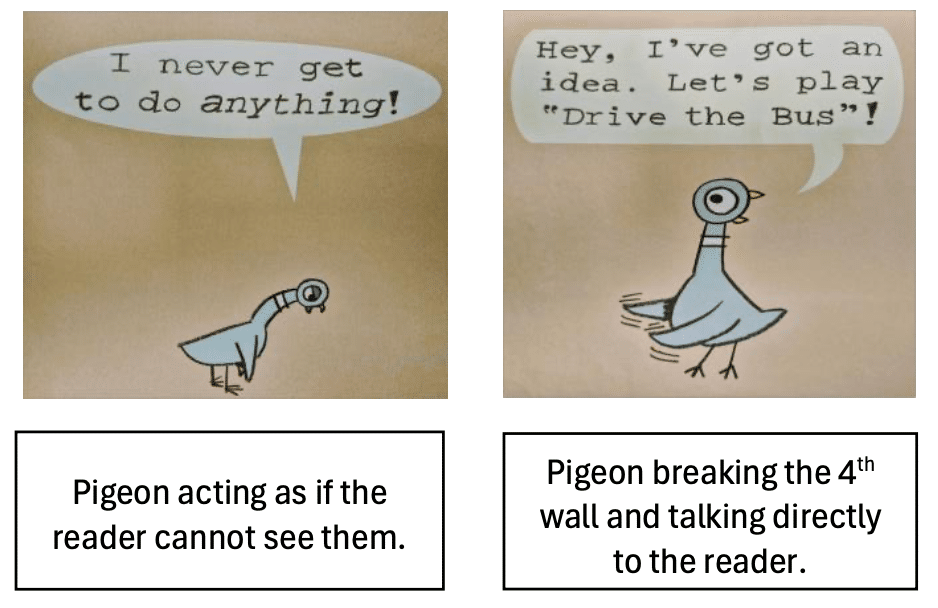 When Mo Willems first created Pigeon, another character’s job was to stop Pigeon from driving the bus. Then Willems had a new idea: what if Pigeon talked directly to the reader instead? This meant Pigeon would be breaking the fourth wall, an imaginary barrier between a story and its audience. When characters break the fourth wall, they speak directly to readers or viewers as if they can see and hear them. By having Pigeon talk directly to readers, readers became part of the adventure as Pigeon tried to convince them to let him do things he shouldn’t. The direct conversation between the Pigeon and the reader creates an unforgettable and memorable reading and visual experience. Readers are not just watching the story; they are part of it!
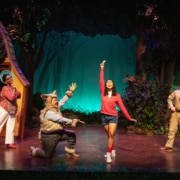
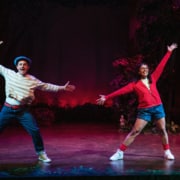
When Pigeon talks directly to readers, the readers can’t help but talk back! After watching Don’t Let the Pigeon Drive the Bus! The Musical!, keep the conversation going with these discussion starters:
• What did Pigeon do in the play?
• Pigeon did a lot of learning in the play; how do you feel when you learn something?
• What big feelings did Pigeon have in the play?
• When did you feel happy? Sad? Mad?
• How do you feel when you have to wait for something you want?
• Who helps you when you have big feelings?
• What rule did the Bus Driver make?
• Why do we have rules?
• What is a rule you follow at home or at school?
• How can rules help keep us safe?
• Do you have a favorite rule?
Mo Willems believes children learn through storytelling and play. Bring Pigeon’s playfulness to life at home or in the classroom with these simple activities!
Play upbeat music. Explore moving like a pigeon to the beat: strutting, flapping, stomping, and hopping. Pause the music and call out a feeling:
• Exited Pigeon!
• Sad Pigeon!
• Silly Pigeon
• Angry Pigeon!
• Surprised Pigeon!
• Proud Pigeon!
Everyone freezes in a pose that shows that feeling. Start the music again and continue.
Pretend you are Pigeon getting ready to drive the bus! Call out:
• Climb onto the bus.
• Look around to make sure no one is watching.
• Sit in the driver’s seat.
• Put on your seatbelt.
• Grip the steering wheel with both hands.
• Say, “Next stop – City Park!”
• Open the bus door and let passengers on
• Drive slowly
• Drive quickly
• Turn right
• Turn left
• Go over bumpy potholes
• Stop and call out: City Park!
• Open the door and let passengers off
• Park the bus
End with a “Great Driver!” cheer.
Fill in the blank with silly ideas from the play or the books:
• Drive a bus
• Have a puppy
• Eat a cookie
• Avoid taking a bath
One player pretends to be Pigeon and tries to convince the group to say yes to letting them do the silly idea. The group answers, “NO!” Pigeon can use funny voices, faces, and movements before trying again. To further storytelling and imagination let the group invent their own ideas:
• “Don’t let the Pigeon be a firefighter!”
• “Don’t let the Pigeon ride a dinosaur!”
• “Don’t let the Pigeon run the zoo!”
Create a simple Pigeon puppet and bring the character to life using movement and voice. Instructions:
• Use a marker to draw two eyes on the sock.
• Place your hand inside the sock and fold it so the opening becomes the puppet’s mouth.
• A good puppeteer makes the puppet look alive by keeping its movements small and focused.
• Practice making the puppet talk by moving only your thumb up and down.
Explain that puppets often “look” at what they are talking about. When you call out a direction, students should quickly turn their puppet’s head and say, “Wow!”
• Up
• Down
• Left
• Right
• Side to side
Call out a direction and say a Pigeon-inspired line:
• “I’m driving the bus!”
• “This is the best day ever!”
• “Look at me go!”
Mo Willems uses simple words and expressive pictures to show big feelings and actions. Create your own Pigeon and Duckling story! Fill in the blanks and draw pictures to go with your story.
One day, Pigeon and Duckling went to ______________________________________________________.
There, Pigeon found ______________________________________________________.
“Oh, no!” cried Pigeon. “What will I do about ______________________________________________________ ?”
Duckling had an idea. Together, they ______________________________________________________.
At the end of the day, Pigeon and Duckling ______________________________________________________.
The End
The Denver Center for the Performing Arts (DCPA) NewsCenter is the organization’s editorial platform for stories, announcements, interviews, and coverage of theatre and cultural programming in Colorado. We are committed to producing accurate, trustworthy, clearly sourced journalism that reflects our mission and serves our community.